Most teams exploring AI for marketing and creative work hit the same wall fast. Without real context, AI outputs need constant re-prompting and correction before they're usable. There was no scalable way to make sure outputs matched a brand's voice, channel rules, compliance requirements, or tone, so that burden fell on whoever was typing the prompt, every single time.
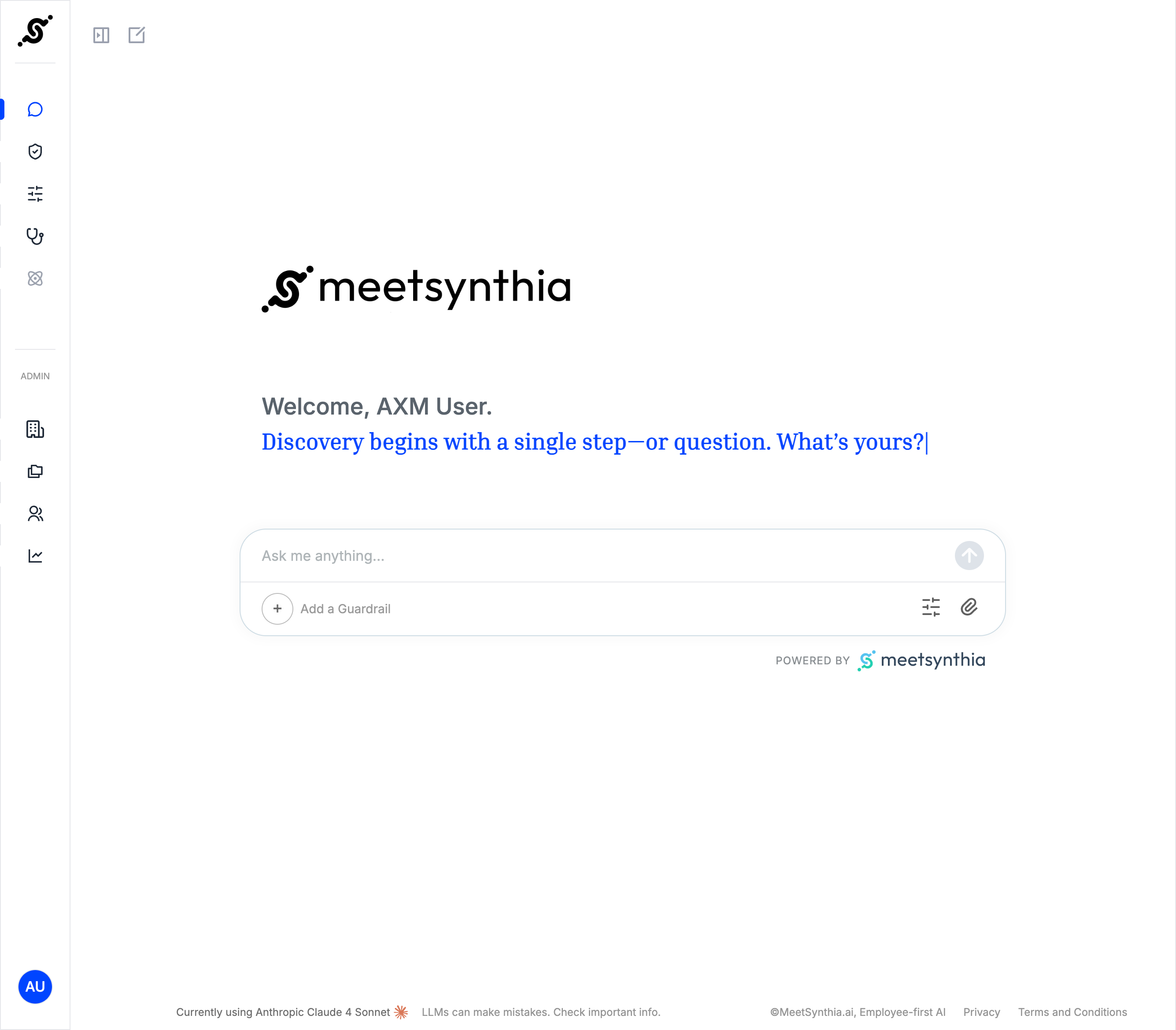
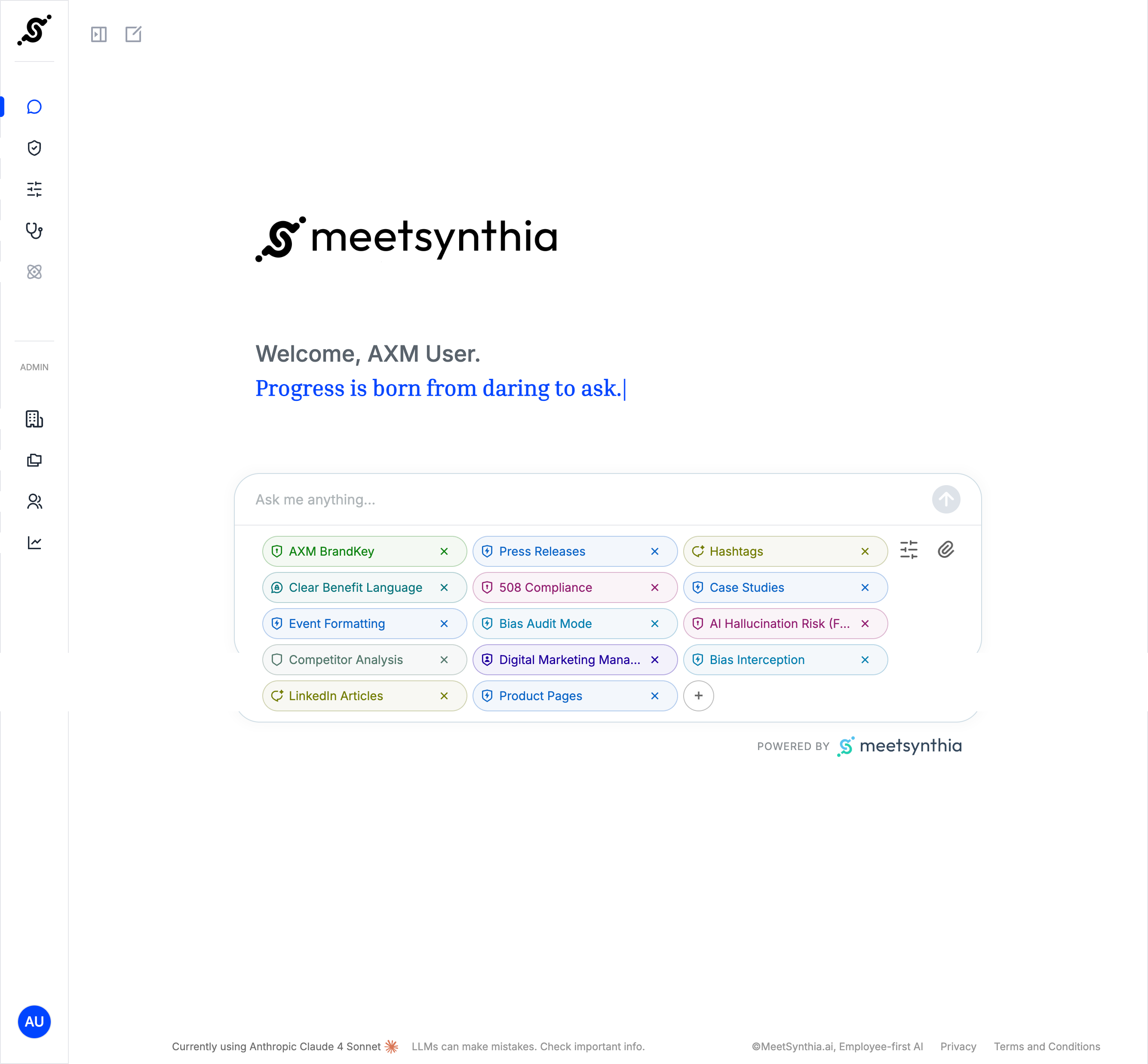
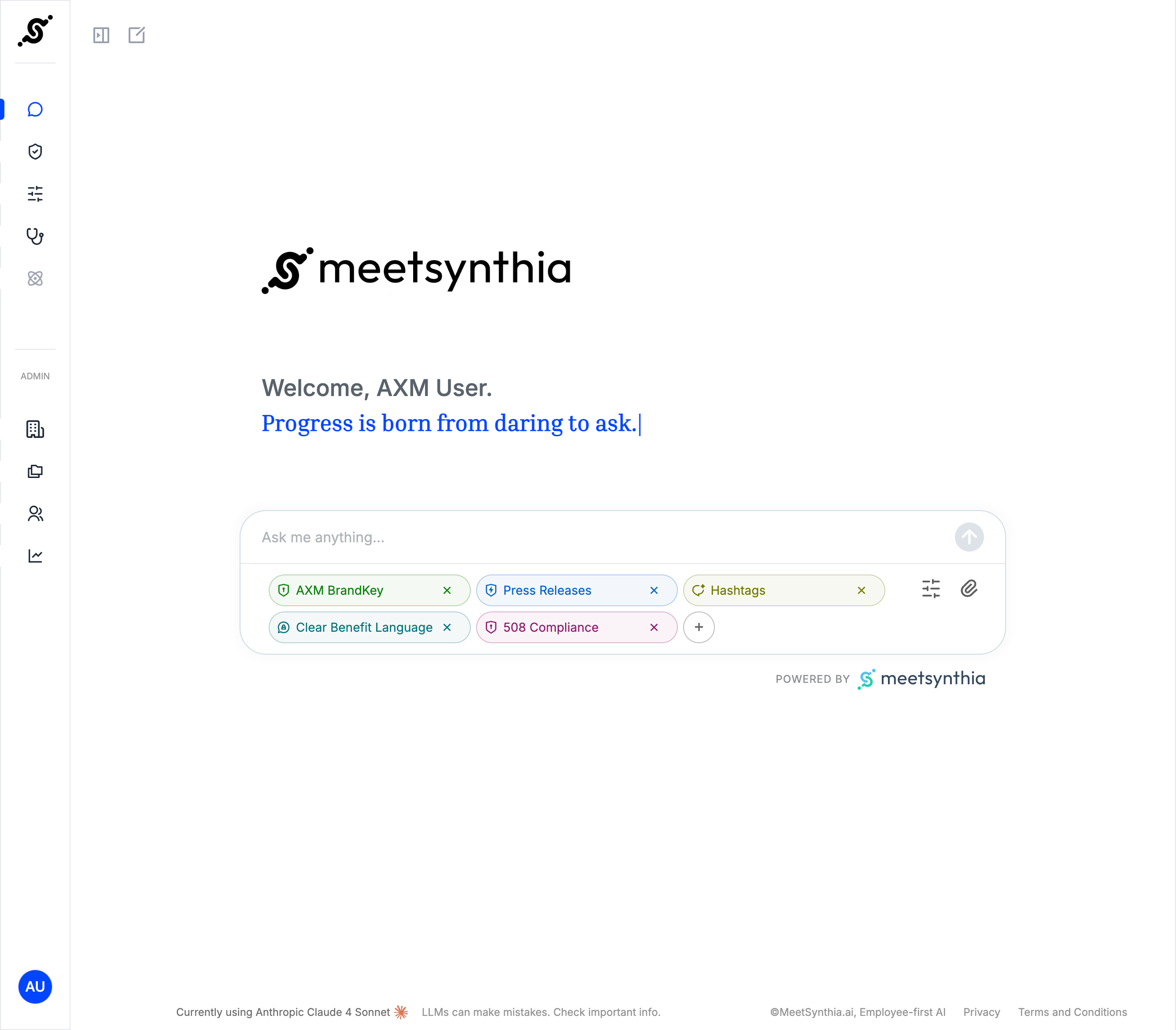
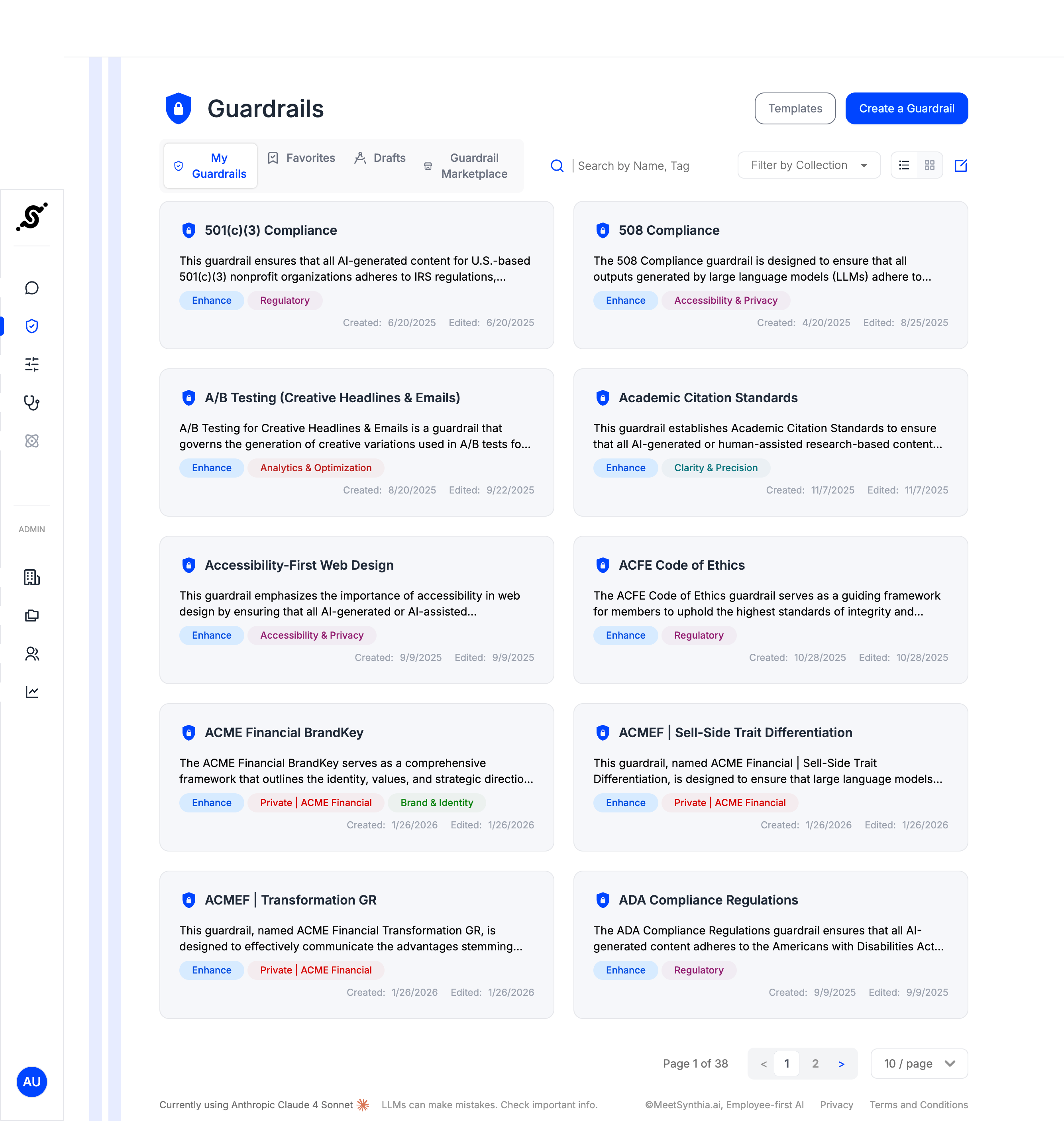
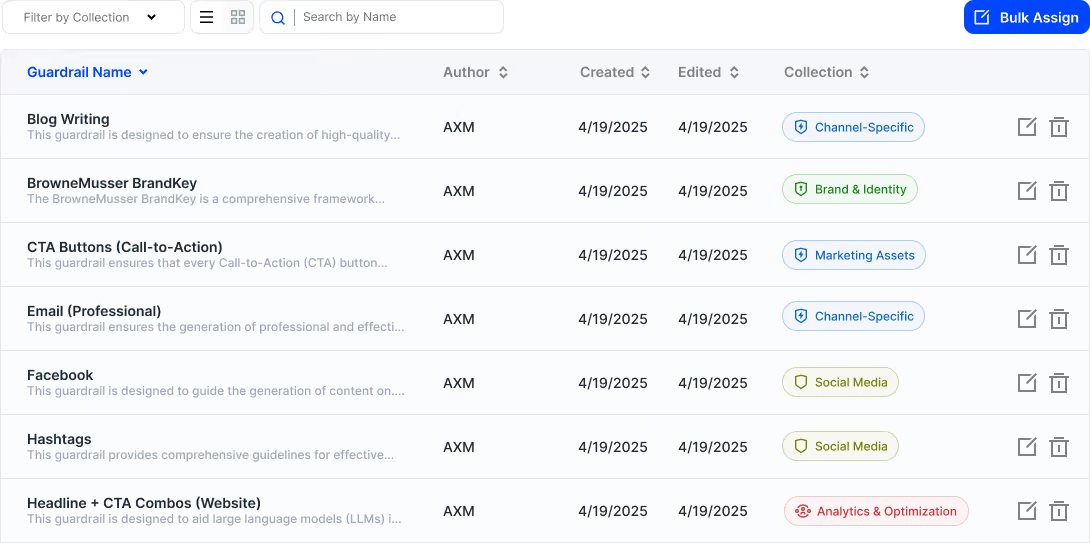
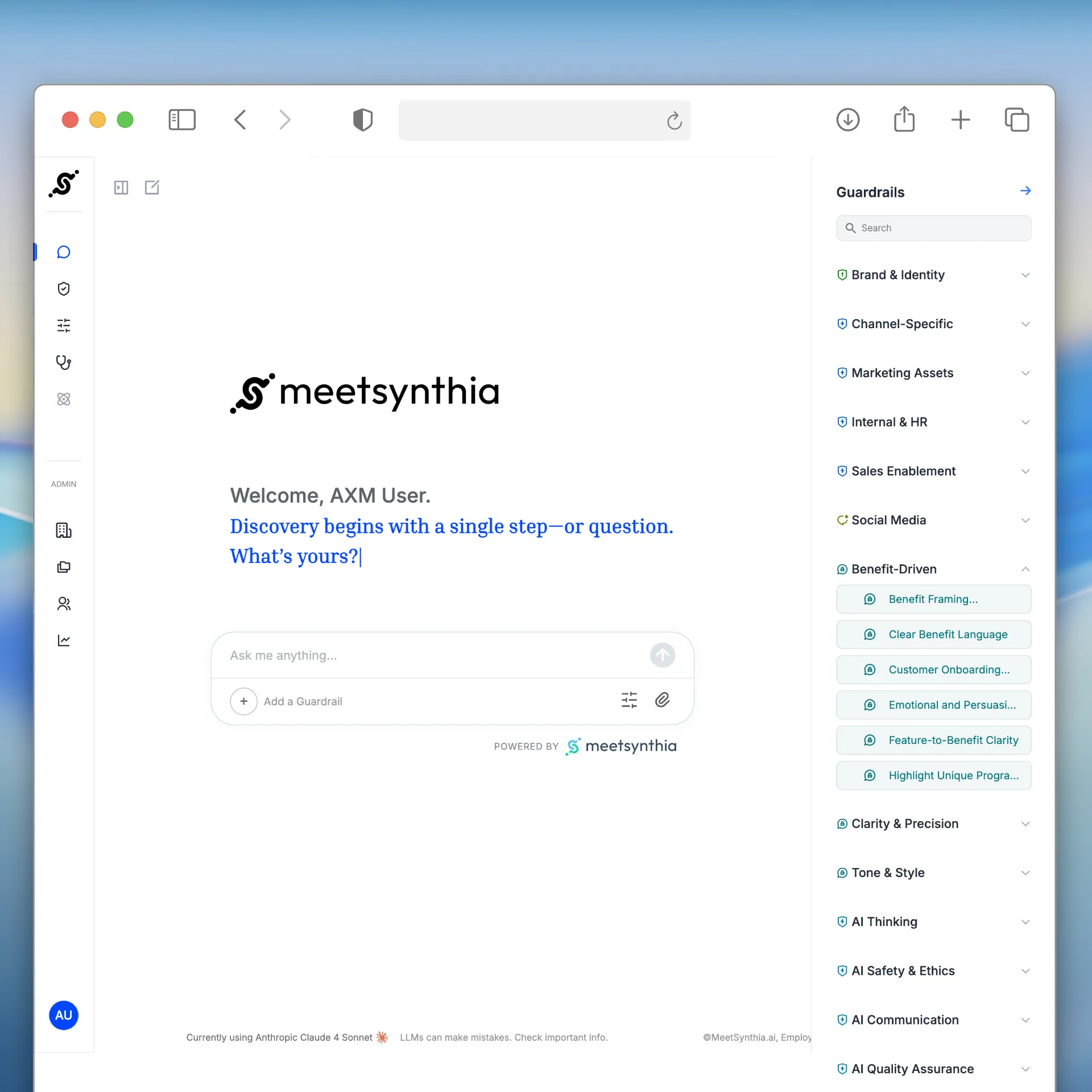
As Partial Owner, Product Design & Guardrail Architect, I saw Synthia's core technology (a rules-based system that sits between the user and the LLM) as a strong idea. It needed substance: a library of ready-to-use guardrails so new users could get value on day one, without configuration or a setup call. Working with my partner Alex at AXM, we built a library of nearly 400 guardrails across categories including Channel, Tone, Brand, Benefit-Driven, Social, and Analytics, then introduced presets: curated groupings that solve a whole workflow at once.
A CPG brand drafting a press release can combine a brand guardrail with press release formatting and FDA compliance rules in a single preset and get an on-brand, compliant draft from the start. Past the content architecture, my fingerprints are on the product itself: UI decisions, admin functionality, client setup flows, the overall shape of how it works. One rule guided all of it: simple to use, hard to break.
A platform that cuts out the re-prompting cycle by giving AI the context it needs to get close to final on the first pass. New users land in a system that already works instead of a blank one they have to configure. Clients with specific needs get guardrail stacks built for them that scale as they grow.
What started as a promising but bare framework is now infrastructure marketing teams can actually run on, without turning every employee into a prompt engineer.